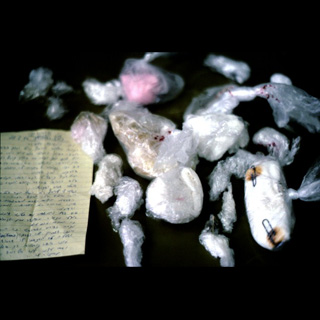
Delusional parasitosis (DP) (also known as Ekbom syndrome or Morgellons disease) is a psychiatric condition with a long and complex background that lies at the intersection of dermatology, psychiatry, and neurology. It is characterized by a firm conviction of being infested with animal parasites (most commonly insects or worms), despite the absence of any objective evidence to support this belief. Complaints usually concern the skin; however, involvement of the gastrointestinal tract has also been reported. Patients frequently bring numerous samples for examination, collected from their skin, clothing, or environment. Practically all patients refuse psychiatric referral or treatment. In primary DP, the delusion arises spontaneously as a monosymptomatic delusional disorder, whereas in secondary DP, the delusional belief develops in association with another underlying medical, neurological, or psychiatric condition. A shared delusion (folie à deux) is a well-recognized phenomenon in delusional parasitosis, in which one or more members of the same family develop an identical delusional state. Secondary victims are often family members who are dominated by a spouse, demonstrate strong filial devotion, or attempt to preserve family harmony.
Patients whose delusion of parasitosis is relatively mild may sometimes be managed without psychopharmacological intervention. Sympathetic counseling and the establishment of trust can significantly alleviate distress, and symptomatic medications may be prescribed to relieve pruritus, pain, or other associated complaints. An empathetic, non-judgmental approach—providing patients with a setting in which they can express their suffering without feeling stigmatized—is essential. When pharmacological treatment is required, first- and second-generation antipsychotics, administered at age-appropriate doses, are currently used in the management of DP.
On average, every one to two months such patients also present to our laboratory seeking help, and specimens believed to be parasites are examined microscopically (Schwartz et al., 2001; Taylan & Mumcuoglu, 2008; Mumcuoglu et al., 2018).
References:
Schwartz, E., E. Witztum & K.Y. Mumcuoglu. 2001. Travel as trigger for shared delusional parasitosis. J. Travel Med. 8: 26-28.
Taylan Ozkan, A. & K.Y. Mumcuoglu. 2008. Entomophobia and delusional parasitosis (in Turkish). Turkiye Parazitol. Derg. 32: 366-370.
Mumcuoglu KY, Leibovici V, Reuveni I, Bonne O. 2018. Delusional parasitosis: Diagnosis and treatment. IMAJ 20: 456-460.